Greater Cleveland, Northeast Ohio · Ohio
Cannabis CPA & Accounting Services in Strongsville, Ohio
We provide accounting, tax and financial management support to cannabis operators along the Strongsville retail corridor and the wider southwest Cleveland suburbs. Most of the businesses we talk with here run one or two storefronts and need their books to hold up under real scrutiny — from a lender, a landlord or a tax filing — without a rebuild every time someone asks a question.
Cannabis Accounting in Strongsville
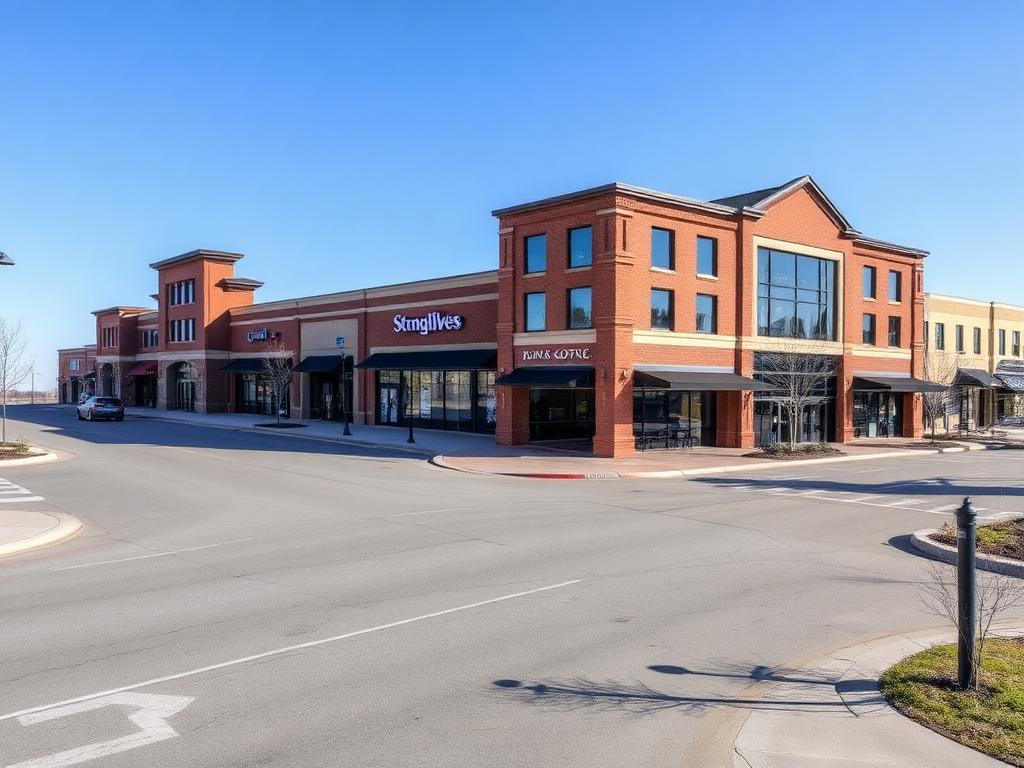
Strongsville sits on a retail corridor, and the operators here are usually single- or dual-site dispensaries rather than sprawling multi-entity groups. That smaller footprint does not make the accounting simpler — it just changes where the risk hides.
- Transactions
- Bookkeeping
- Reconciliation
- Month-end close
- Financial statements
- Tax & management decisions
A one- or two-store operator can go a long way on instinct, because the owner sees most of what happens on the floor. The problem shows up at tax time, at renewal, or when a bank asks for statements, because instinct does not produce a reconciled balance sheet. The gap between 'the owner knows the business is fine' and 'the records prove the business is fine' is exactly the gap that causes trouble.
The fix is not more software. It is a defined process: transactions recorded the same way every time, balances tied to something independent, and a close that happens on a schedule rather than whenever there's a spare afternoon. For a Strongsville retailer weighing a second location, that process is also the only reliable way to know whether the first store's numbers are strong enough to justify the move.
We build that process around the size of business that's actually here — lean staff, an owner-operator making most decisions, and a real need for reporting that doesn't require a finance department to read.
Cannabis Bookkeeping in Strongsville
For a single-site or two-site Strongsville dispensary, bookkeeping usually isn't neglected so much as it's incomplete — entries get made, but nothing gets checked against an outside source.
- Transaction coding against a cannabis-appropriate chart of accounts
- Bank and credit account reconciliation every period
- Cash activity, deposits and undeposited funds reconciled
- Inventory activity recorded and tied to supporting records
- Accounts payable and vendor activity maintained
- Payroll entries posted and payroll liabilities reconciled
- Balance-sheet account reconciliation, not just the P&L
- A monthly close that produces usable financial statements
We treat reconciliation as the non-negotiable step, not an optional extra: bank balances agreed to statements line by line, register cash traced through to the deposit, inventory tied to a count rather than assumed correct, and every balance-sheet line examined instead of left to carry forward untouched. This is where stale, forgotten or simply wrong balances get found — they almost never show up on the P&L.
A retailer running two stores needs one more thing: a consistent cutoff date each month so the two locations' numbers can actually be compared. Without that, one store's late-arriving invoice can make it look like it underperformed the other, when nothing of the sort happened.
Dispensary Accounting in Strongsville
Dispensary accounting comes down to two things staying honest with each other: the cash coming through the register and the product moving through inventory into cost of goods sold. In a corridor like Strongsville, where storefronts compete on convenience and price, thin margins make both worth watching closely.
- Customer sale
- POS
- Cash / payments
- Bank
- General ledger
- Purchasing
- Inventory
- COGS
On the cash side, the discipline is simple to describe and easy to skip: count the drawer, compare it to what the POS says should be there, prepare the deposit, and reconcile the deposit to the bank. Do that daily and a $40 variance gets caught while someone can still remember the shift. Do it monthly and that same variance is untraceable noise by the time anyone looks.
On the product side, cost of goods sold has to come from inventory records, not be backed into from a purchases total. Receiving is where most of the damage happens — a wrong unit cost or quantity entered at intake rides all the way through to the income statement. When margin at a Strongsville store looks off, we start at receiving and the last physical count before we look anywhere else.
- POS sales summarized and tied to recorded revenue
- Cash collected, counted and traced to deposits
- Bank deposits reconciled to the ledger
- Purchasing and receiving matched to vendor invoices
- Inventory maintained and reconciled by location
- Cost of goods sold derived from inventory, not estimated
- Gross margin reviewed for movement that has no operational cause
- Payroll and operating costs coded to the store that incurred them
- A month-end close that leaves nothing unreconciled
280E Accounting & Tax Planning for Strongsville Operators
Where Section 280E applies, a Strongsville retailer's tax position is only as strong as the inventory and cost records behind it. That's a different standard than most small retail businesses are used to meeting.
- Bookkeeping
- Inventory accounting
- COGS support
- Financial statements
- Tax workpapers
Costs that are properly capitalized into inventory and recovered through cost of goods sold receive different treatment than ordinary operating expenses under Section 280E. Whether a given cost qualifies depends on the facts, the inventory method applied and applicable federal tax treatment — there is no shortcut that substitutes for documentation, and no software setting that decides it for you.
We don't predict how federal law will move, and we don't build a filing position around a guess. What we do is keep the underlying records — consistent inventory methodology, reconciled counts, allocation workpapers — solid enough to support whatever position is taken. For an owner considering a second Strongsville location, it's worth modeling the tax cash impact before signing a lease, not after.
Inventory & COGS
For a corridor dispensary, inventory isn't a side ledger — it's usually the single biggest number on the balance sheet, and the one most likely to be wrong if nobody's checking it.
- Beginning inventory
- + Purchases / production
- − Ending inventory
- = Cost flow
Three different records claim to describe the same product: a physical count of what's actually on the shelf, an operational tracking record of what moved, and an accounting record of what value is carried. These are not the same question asked three ways — quantity and value diverge whenever cost, waste or shrink enters the picture, and a tracking-system quantity says nothing about the dollar figure that belongs on the books.
Because cost of goods sold flows directly from inventory, an uncorrected inventory error becomes a margin error automatically. For a two-store Strongsville operator, the practical fix is a consistent count schedule at both locations and a reconciliation process that catches variances before they compound month over month.
- Physical inventory — what is actually on hand
- Operational inventory — what the tracking system records
- Accounting inventory — what the financial records carry as value
- Cost of goods sold — derived from inventory activity
- Gross margin — the result those figures produce
Metrc & Operational Reconciliation
Metrc and the accounting ledger are built for different purposes, and expecting them to match on their own is where a lot of Strongsville operators get frustrated.
- Metrc
- POS
- Physical inventory
- Accounting inventory
- General ledger
Reconciliation isn't about forcing two systems to agree — it's about comparing them on purpose, sorting the differences into categories like timing, data entry, valuation or a documented operational adjustment, and writing down the explanation for each one. A difference that's been explained is a non-issue. A difference nobody looked at is a liability waiting to surface at the worst time.
For a two-store setup, product transfers between locations are the recurring trouble spot. Product that's left one store's inventory but hasn't landed in the other's yet sits in limbo unless someone deliberately accounts for it at month-end — otherwise both locations' counts look wrong for no real reason.
Cannabis Payroll
Payroll for a retail operation this size is usually a handful of budtenders, a manager or two, and an owner who also works the floor — small enough to seem simple, but the accounting still has real failure points.
- Gross wages recorded as employer cost
- Employer payroll taxes and benefits where applicable
- Employee deductions carried as liabilities until remitted
- Payroll liability accounts reconciled each period
- Labor coded by department, function and location
- Payroll register reconciled to the general ledger
The most common issues are structural, not mathematical: withheld employee taxes booked as an expense instead of a liability, employer payroll tax not separated from wages, a clearing account that never actually clears, and nobody testing the payroll liability balance against what's actually owed at period end.
For a two-store operator, coding labor to the correct store at the time it's entered matters more than people expect — trying to split hours between locations after the fact from time-clock exports is tedious and rarely comes out exactly right.
Fractional CFO Support
A Strongsville operator weighing a second store, a lease renewal or a bank relationship usually needs sharper financial visibility than a bookkeeper provides, without taking on a full-time finance hire.
- Cash-flow forecasting and 13-week cash visibility
- Annual budgeting and rolling forecasts
- KPI definition and performance review
- Inventory and working-capital planning
- Tax reserve planning where applicable
- Location and product-line profitability analysis
- Scenario planning for expansion or contraction
- Capital and debt planning support
That middle layer looks like: a budget grounded in the store's actual cost structure rather than a rough guess, a cash forecast that looks 13 weeks ahead instead of reporting on the week that already happened, KPIs defined consistently so 'gross margin' means the same thing every month, and inventory planning so cash isn't quietly locked up in slow-moving product.
For an owner sizing up expansion, the most useful exercise is usually a straightforward comparison: what does a new store cost in cash before it turns a profit, and does the existing location's performance actually support opening a second one, or does it just feel like it should.
Financial Reporting
Reporting matters only if a Strongsville owner can read it and act on it without a follow-up call to explain what it means.
- Income statement with meaningful cost detail
- Balance sheet with reconciled accounts
- Cash-flow reporting management can act on
- Gross margin by category and location
- Inventory balances that tie to operational records
- Budget-versus-actual comparison
- Location-level reporting for multi-site operators
- Management reporting packages on a set cadence
In practice that means an income statement broken out enough to show real cost drivers, a balance sheet that's been reconciled rather than assumed correct, a clear read on cash position, margin shown by product category, and — for two-store operators — results shown separately by location as well as combined. Delivered on a set date each month, early enough to still be useful.
Cannabis Businesses We Support in Strongsville
The Strongsville market is retail-dominant, so most of the operators we work with here are dispensaries, though the corridor also touches delivery and support businesses tied to those storefronts.
Dispensaries need cash and POS reconciliation, per-location inventory, and margin visibility by category — that's the core of the work in this market. Ancillary and support businesses that serve local retailers tend to need clean entity separation and defensible cost allocation more than heavy inventory accounting.
The reporting package and reconciliation checklist get sized to the actual business rather than pulled from a generic template — a single-store retailer doesn't need the same infrastructure as a five-site operator, and shouldn't pay for it.
Multi-Location Cannabis Accounting
Even at two stores, multi-location accounting introduces blind spots that a single consolidated number will hide completely.
- Location A / B / C
- Standardized accounting
- Location P&Ls
- Consolidated reporting
- Management decisions
A cash shortage at one Strongsville store and a cash overage at the other can offset each other on a combined report and disappear entirely. One location can be overstaffed relative to its sales while the other carries the slack, and the combined payroll ratio still looks reasonable. None of that becomes visible without coding transactions by location from the start and reporting them that way too.
The mechanics that make it work: the same chart of accounts and coding conventions at both stores, inventory counted and reconciled at each one separately, transfers between them recorded on both sides of the ledger, and a consolidated report built up from clean location detail rather than assembled after the fact from whatever's available.
- Location coding applied at entry, not reconstructed later
- Bank and cash activity traceable to the site that generated it
- Inventory maintained and counted by location
- Payroll and labor cost assigned to the store where work occurred
- Shared and corporate expenses allocated on a documented basis
- Transfers between locations recorded on both sides
- Store profitability comparable across sites
- Consolidated reporting built from clean location detail
Common Cannabis Accounting Problems
When we take on a new Strongsville engagement, the existing books tend to have the same handful of issues, in some combination.
Bank accounts are not reconciled
Nothing downstream can be trusted until every account agrees to a statement. This is the first thing we test.
POS revenue does not tie to deposits
Sales, payment activity and bank deposits should connect through a documented path with explainable timing differences.
Cash differences accumulate
Small unexplained variances that are never investigated become a large balance nobody can reconstruct.
Inventory does not tie between systems
Operational quantities, physical counts and accounting inventory should be reconcilable, with differences classified by type.
COGS changes unexpectedly
Margin that swings without a pricing, mix or purchasing explanation almost always traces back to inventory.
Payroll liabilities remain stale
Liability accounts should hold only what is accrued and unpaid. Balances that never move indicate posting or remittance issues.
Books are months behind
Late records cannot support tax planning or operating decisions, and errors get harder to investigate every month.
Locations are mixed together
Without location coding, a multi-site operator cannot tell a strong store from one that is losing money.
Balance-sheet accounts are ignored
Most persistent errors live on the balance sheet. Reconciling only the P&L leaves them in place indefinitely.
Tax reserves are not planned
Where the tax position is significant, the cash requirement should be modeled in advance rather than discovered at filing.
Management cannot see location profitability
Reporting that only shows a company total cannot answer the questions operators actually need answered.
Operational and financial records never meet
Tracking systems and accounting systems answer different questions; when they are never reconciled, both become unreliable.
None of these point to carelessness — they're what happens when an owner is running the floor and the accounting at the same time, and nobody's job is specifically to reconcile. The order of the fix matters: reconcile the balance sheet first, correct whatever the reconciliation turns up, then put a recurring monthly process in place so the same gaps don't quietly reopen six months later.
Our Process
How an engagement starts depends on the state of the existing books and how many locations or entities are involved — a clean single-store operator and a messy two-store one don't follow the same path.
- 01Understand the business, license types and entity structure.
- 02Review the current state of the accounting records.
- 03Review bank and cash activity and how it is documented.
- 04Review sales and POS data and how revenue is recorded.
- 05Review inventory, purchasing and receiving processes.
- 06Review payroll and how it posts to the ledger.
- 07Review tax and accounting issues that need attention.
- 08Identify cleanup needs and prioritize them.
- 09Establish recurring bookkeeping and reconciliation.
- 10Produce reliable, on-time financial reporting.
- 11Add tax and CFO support where the business needs it.
Where cleanup is needed, we focus first on the issues that actually move the numbers, rather than reconstructing every transaction to the same level of detail regardless of size. If part of a prior period genuinely can't be rebuilt from what still exists, we say so plainly instead of papering over it. The end goal is a monthly process the owner can rely on going forward, not a one-time fix.
Serving Cannabis Businesses in Strongsville and Nearby Ohio Markets
We work with cannabis operators throughout the southwest Cleveland suburbs surrounding Strongsville, as well as businesses in Cleveland proper, Beachwood, Akron and Canton whose ownership or management touches more than one Northeast Ohio market. All engagements are conducted remotely with secure document exchange and scheduled review calls.
Cannabis Accounting FAQs — Strongsville, Ohio
- Do you work with cannabis dispensaries in Strongsville?
- Yes. We handle bookkeeping, inventory and cost accounting, payroll accounting, tax support and fractional CFO work for dispensaries and related businesses in Strongsville and the surrounding southwest Cleveland suburbs, delivered remotely with secure document exchange.
- We only have one store — do we really need a cannabis-specific accountant?
- A single store still faces inventory-driven cost of goods sold, Section 280E exposure and Metrc-to-books reconciliation, all of which behave differently than a typical retail business. General bookkeeping without that context tends to miss the issues that matter most at tax time.
- Can you help us open a second location?
- Yes. That usually starts with confirming the first store's numbers are reliable enough to plan from, then modeling the cash needed to open and staff a second site before it becomes profitable, along with what a second location does to the combined tax position.
- How does Section 280E affect a Strongsville dispensary?
- Where Section 280E applies, costs properly captured in inventory and recovered through cost of goods sold get different treatment than ordinary expenses. The specific outcome depends on the facts, the inventory method used and applicable federal tax treatment, which is why documented, consistent inventory accounting matters more here than in most retail businesses.
- Can you reconcile our Metrc records to our books?
- Yes. That work compares Metrc activity against POS sales, physical counts and accounting inventory, sorts out differences by category, and documents an explanation for each one so nothing gets left as an unexplained gap.
- Our books haven't been reconciled in months — can you fix that?
- Usually, yes. We start with a diagnostic of the bank, cash, inventory and payroll accounts, prioritize the issues that are actually material, and correct them with documentation of what changed and why. If part of the history genuinely can't be reconstructed, we'll tell you that directly.
- Do you handle payroll accounting for a small dispensary staff?
- Yes. We handle the accounting side — liability reconciliation, clearing account discipline, and labor coded by store and role — working alongside whatever payroll processor you already use rather than replacing it.
- What does fractional CFO support look like for a business our size?
- For a one- or two-store operator, it typically means a working budget, a rolling cash forecast, clearly defined KPIs, and scenario planning for decisions like a new lease or a second location — senior-level financial planning without a full-time hire.
- Do you provide services to businesses beyond dispensaries in this area?
- Yes, including delivery operations and ancillary businesses that serve local retailers. Those businesses typically need clean entity separation and cost allocation more than heavy inventory work, and we scope the engagement accordingly.
- Is there a local Strongsville office?
- No — engagements are handled remotely with secure document exchange and scheduled video or phone calls. That structure lets us apply the same reconciliation and reporting standard to operators anywhere in Ohio.
- How long does it take to see cleaner reporting after we start?
- It depends on how current the existing books are. If the records are mostly up to date and just need reconciliation discipline, improvement is usually visible after the first monthly close. If real cleanup is required, we sequence the most material fixes first and give a realistic timeline after the initial review.
- Can you compare performance between our two stores?
- Yes, provided both locations are coded and reconciled consistently. Once that's in place, we can report store-level margin, labor cost and inventory turnover side by side rather than only a combined total.
Nearby Ohio Markets
Cannabis Accounting in Cleveland
We provide accounting, tax and financial management support to cannabis businesses across the Cleveland metro. Much of the region's operator base runs more than one storefront across the city and its suburbs, so our work is built around consolidating scattered locations into a single, dependable set of financial records rather than treating each site as its own bookkeeping project.
Read moreCannabis Accounting in Beachwood
We support cannabis ownership groups, investor-backed operators and their advisors based in and around Beachwood's professional business district. Much of the work here involves boards, minority investors, lenders or outside counsel expecting financial statements that hold up to that level of review — not just numbers that satisfy the owner.
Read moreCannabis Accounting in Akron
Akron sits in an industrial corridor that has attracted a mix of cultivation, processing and retail cannabis operations. We build accounting systems for those businesses that hold up to production complexity — batch costing, yield tracking and inventory records that support both margin analysis and tax positions.
Read moreCannabis Accounting in Canton
Canton's cannabis operators are mostly smaller, owner-run businesses without a large administrative staff behind them. We build accounting processes sized to that reality — enough structure to be reliable and defensible, without the overhead of a system designed for a much larger company.
Read moreCannabis Accounting Services
Cannabis Bookkeeping
Monthly bookkeeping built for licensed cannabis operators, including 280E-aware chart of accounts, reconciliations, and close packages.
Read moreDispensary Accounting
Retail cannabis accounting covering point-of-sale reconciliation, cash controls, inventory valuation, and monthly close for licensed dispensaries.
Read more280E Tax Planning and Compliance
Section 280E planning, cost of goods sold methodology, and documentation support for licensed cannabis operators throughout Ohio.
Read moreSeed-to-Sale Reconciliation
Reconciliation between the statewide monitoring system, inventory subledgers, and the general ledger for licensed Ohio cannabis operators.
Read morePayroll Services
Payroll processing and departmental labor allocation for licensed cannabis operators, including production labor capitalization support.
Read moreFractional CFO Advisory
Part-time CFO support for licensed cannabis operators: forecasting, capital planning, KPI reporting, and board-ready financial packages.
Read moreFinancial Reporting
Monthly financial statements, KPI dashboards, and stakeholder reporting packages prepared for licensed cannabis operators.
Read moreTax Preparation
Federal and state tax return preparation for licensed cannabis businesses, with inventory-driven cost of goods sold support and reconciled workpapers.
Read moreBusiness Advisory
Advisory support for licensed cannabis operators: expansion analysis, pricing review, internal controls, and operational financial planning.
Read moreCannabis Businesses We Work With
Dispensaries
Accounting, inventory, and tax support for licensed retail cannabis stores, covering point-of-sale reconciliation, cash controls, and margin reporting.
Read moreCultivators
Batch costing, yield analysis, and inventory accounting for licensed cannabis growers, from propagation through harvest and transfer.
Read moreManufacturers
Process costing, yield variance, and inventory accounting for licensed extraction and infused product manufacturers.
Read moreProcessors
Cost accounting and compliance support for licensed processors handling extraction, refinement, and bulk product conversion.
Read moreCannabis Brands
Financial support for cannabis brands and licensing companies, covering co-packing arrangements, royalty accounting, and margin analysis.
Read moreAncillary Businesses
Accounting and tax services for non-plant-touching companies serving the cannabis sector, including equipment, technology, and professional service firms.
Read moreHelpful Guides
Ohio Cannabis Accounting Guide
A 2026 technical guide to cannabis cost accounting in Ohio: Section 471-11 COGS isolation, general ledger design, a 15-day close checklist, and Metrc reconciliation.
Read moreOhio Cannabis Tax Guide
A 2026 technical guide to Ohio cannabis taxation: Schedule III rescheduling status, 280E cost-allocation defense, the 10% adult-use excise tax, sales tax variations, and municipal filings.
Read moreDispensary Accounting Guide
Retail cannabis accounting practices: daily close, inventory valuation, tax accrual, discount tracking, and margin reporting for licensed stores.
Read more280E Explained
A plain-language explanation of Internal Revenue Code Section 280E, what it disallows, and how inventory costing determines recoverable cost.
Read moreSeed-to-Sale Guide
How to reconcile the statewide monitoring system with accounting records, including variance causes, cadence, and documentation practices.
Read moreCFO Guide
A guide to financial leadership for cannabis operators, covering forecasting, KPI selection, capital planning, and board reporting.
Read moreTalk With a Cannabis Accountant Serving Strongsville
Call to talk through your license types, entity structure, current records and reporting needs, or schedule a consultation at a time that works for your team. Engagements are handled remotely with secure document exchange.