Service
280E Accounting & Tax Compliance for Ohio Cannabis Businesses
Specialized accounting, inventory, cost of goods sold and tax documentation designed to support Ohio cannabis businesses subject to Section 280E. The work runs through the year — chart of accounts, monthly close, inventory support, and workpapers — so the tax position rests on records rather than year-end reclassification.
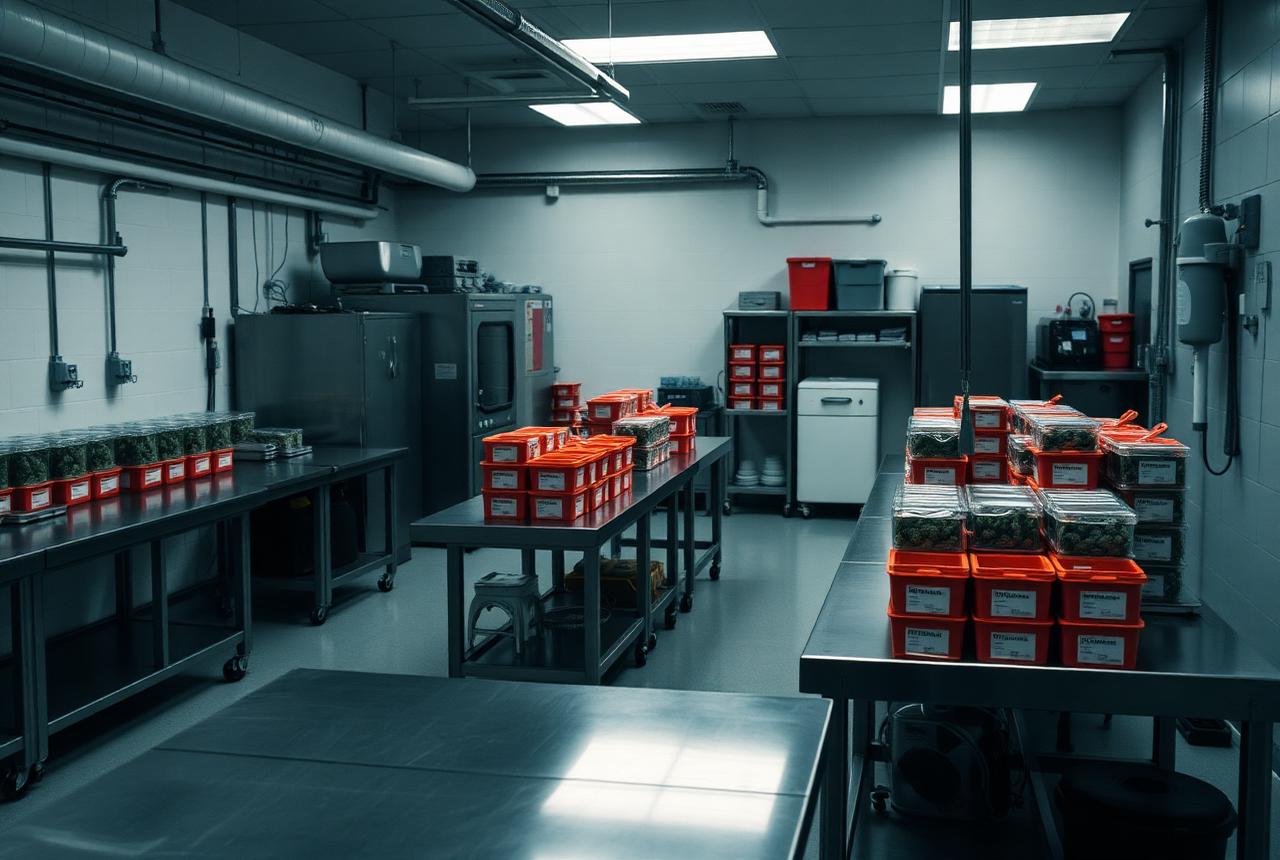
Section 280E Accounting for Ohio Cannabis Businesses
Where Section 280E applies, the quality of the underlying accounting records becomes the difference between a supportable tax position and an estimate. Cost of goods sold carries the weight of the calculation, and cost of goods sold is an accounting output long before it is a tax number.
- Bookkeeping
- Chart of accounts
- Inventory
- Cost classification
- COGS
- Financial statements
- Tax workpapers
280E work should not begin when the return is being prepared. By then the coding decisions have already been made, the inventory counts either exist or do not, and the purchase records either support the cost of goods sold figure or leave gaps that cannot be closed retroactively. The accounting system has to produce usable records throughout the year: transactions classified correctly at entry, inventory reconciled monthly, allocation drivers measured while the data still exists, and support filed as it is created.
- Chart of accounts designed around cost behavior and business function
- Monthly bookkeeping with classification applied at the point of entry
- Inventory accounting reconciled to counts and operational records
- Documented allocation methodology applied consistently across periods
- Financial statements produced from a closed, reconciled ledger
- Tax workpapers built and retained alongside the accounting records
- Quarterly review of the estimated position and the tax reserve
What Is Section 280E?
Section 280E is a federal tax provision that disallows deductions and credits for a trade or business found to be trafficking in a federally controlled substance, while amounts properly included in inventory and recovered through cost of goods sold remain part of the computation.
For a business subject to it, the effect is that many ordinary operating costs — selling, general, and administrative expenses — do not reduce federal taxable income, even though they are real economic costs recorded in the financial statements. That is why an operator can report a thin book margin and still owe substantial federal tax.
Federal scheduling and the tax treatment of cannabis businesses are subject to change through legislation, regulation, and litigation. This page uses durable language for that reason: where Section 280E applies, the accounting described here supports the position; where the applicable treatment differs for a given period, the same records still support whatever computation is correct. The treatment for a specific entity and tax year should be confirmed with a qualified tax professional for that year.
Read the educational Section 280E explainer
Does 280E still apply in 2026? Medical vs. adult-use after Schedule III
280E Accounting vs Ordinary Cannabis Accounting
Ordinary bookkeeping records economic activity accurately. 280E-sensitive accounting does that and also preserves the detail required to explain how costs were classified and how inventory was valued.
| Area | Additional attention where 280E applies |
|---|---|
| Inventory | Maintained as a live, reconciled account with costed receipts and documented adjustments rather than a periodic estimate. |
| Cost classification | Decided at entry against a defined policy, not sorted at year end from a summarized ledger. |
| COGS support | Traceable from the reported figure back through the subledger to purchase and production records. |
| Functional distinctions | Retail, production, and administrative activity separated in the account structure or by dimension. |
| Documentation | Allocation drivers measured and retained during the period they describe. |
| Year-end workpapers | Assembled from records already in place rather than reconstructed after the fact. |
| Tax planning | Run during the year against actual results rather than discovered at filing. |
This does not make every journal entry a tax position. Most entries are ordinary accounting. The difference is that the system is designed so the entries that do matter can be identified, explained, and supported without rebuilding the year.
280E and Cost of Goods Sold
A year-end cost of goods sold calculation is only as reliable as the inventory records, purchasing records, and classifications that support it. Reliable COGS begins with reliable inventory accounting — there is no shortcut around that sequence.
- Purchases / production costs
- Inventory
- Cost of goods sold
- Gross profit
- Beginning inventory agreed to the prior period's closed balance
- Purchases recorded at cost and matched to vendor invoices and receipts
- Production costs accumulated where the operator manufactures or cultivates
- Inventory adjustments, waste, and destruction documented as they occur
- Ending inventory supported by a count and a consistently applied valuation
- Cost flow method applied the same way each period and disclosed in the policy
- Classification support retained with the records it describes
Two cautions matter here. First, an expense is not inventoriable because it would be useful for it to be inventoriable; the classification has to follow the applicable inventory rules as they apply to the specific operation. Second, ordinary operating expenses do not automatically become inventory costs because a business is inventory-intensive. Where costs are shared between functions, the appropriate treatment depends on the facts, the measurement data available, and the method the business actually uses — which is precisely why the measurement data should be captured during the period rather than estimated afterward.
280E Inventory Accounting
Inventory is the central account. It holds cost on the balance sheet, releases it into cost of goods sold when product is sold, and produces the figures the tax workpapers depend on.
| View of inventory | Question it answers |
|---|---|
| Physical inventory | How much product actually exists, verified by count. |
| Operational / tracking inventory | What the operational and seed-to-sale systems record as existing, and how it moved. |
| Accounting inventory | What financial value is assigned to that product in the ledger and statements. |
- Beginning inventory
- + Purchases / production
- − Ending inventory
- = Cost flow into COGS
- Receiving procedures that create a costed, matched record
- Transfers between facilities, licenses, or entities recorded on both sides
- Adjustments and shrink recorded with a reason and supporting document
- Periodic physical counts reconciled to the ledger and to tracking data
- A valuation method applied consistently and documented in a dated policy memo
- Ending inventory reviewed as a balance-sheet reconciliation, not a plug
The specific tax treatment of inventory costs depends on the business, its accounting method, and the applicable law for the period. What is common to every operator is the requirement that the numbers be reconcilable: quantities that agree, costs that trace, and adjustments that have a stated reason.
280E Chart of Accounts
A chart of accounts should reflect how the business actually operates, rather than being designed solely around tax-return categories. Where Section 280E applies, that structure also has to carry enough functional detail to support the inventory and cost of goods sold workpapers.
- Revenue by channel, category, or license type
- Inventory by stage: raw materials, work in process, finished goods
- Cost of goods sold structured to match the costing method in use
- Payroll separated between production, retail, and administrative labor
- Rent and occupancy separated by facility and function
- Professional fees, marketing, and other operating expenses grouped by function
- Tax liability accounts by type and jurisdiction
- Cash accounts for operating, payroll, reserve, and cash on hand
- Fixed assets and accumulated depreciation by class
- Debt and equity structured to match the entity agreements
Operators running more than one function usually need a second dimension in addition to the account list — department or function (retail, cultivation, production, administration), plus location and entity where those exist. Carrying that dimension in the source systems and the ledger means one account list can be reported several ways without duplicating hundreds of accounts.
We do not publish a universal "280E chart of accounts template." A template built for a single-site retailer will not support a vertically integrated group, and an account structure that the operator's team cannot maintain accurately produces worse documentation than a simpler one applied consistently.
280E Bookkeeping
280E planning is only as strong as the recurring accounting behind it. The classification, the inventory support, and the documentation are all produced by the monthly bookkeeping cycle.
- Monthly bookkeeping with coding against a defined chart of accounts
- Bank reconciliation for every account, every month
- Cash reconciliation from register activity through deposits
- Inventory reconciliation to counts and operational records
- Payroll posting with department and function coding
- Accounts payable entry and vendor invoice matching
- Balance-sheet reconciliation, not only income statement review
- Month-end close on a defined date with a documented checklist
- Chart-of-accounts discipline enforced rather than assumed
- Year-to-date tax workpapers maintained as the year progresses
Waiting until year end creates weak documentation for a mechanical reason: the people who know why a cost was incurred, the invoices that describe it, and the measurement data behind an allocation are all easiest to access in the month it happened. Twelve months later the same work costs more, produces thinner support, and often ends in an estimate.
280E Accounting for Dispensaries
For retailers the 280E question runs through purchasing and inventory. Cost of goods sold is driven by what was bought, what was received, and what was sold — and each of those has to be verifiable.
- POS sales
- Inventory movement
- Cash / payments
- Bank
- General ledger
- COGS / gross profit
- Tax workpapers
- Point-of-sale reports reconciled to recorded revenue by category and tender
- Cash activity, drawer counts, and over/short tracked and explained
- Bank deposits matched to prepared deposits and to the ledger
- Purchasing and receiving matched to vendor invoices at cost
- Discounts, refunds, and voids reported rather than netted silently
- Product movement relieved from inventory into cost of goods sold
- Gross margin reviewed by category and location for plausibility
- Operating expenses coded by function so the workpapers can distinguish them
280E Accounting for Cultivators
Producer accounting differs operationally from retail accounting. Cost is not purchased in finished form; it accumulates through production, and the accounting has to follow it.
- Production costs accumulated by batch or by period
- Direct labor identified and coded to production activity
- Facility costs measured where they relate to production space
- Work in process carried between periods rather than expensed on sight
- Harvest and production quantities recorded alongside cost
- Yield and waste documented with a stated reason
- Finished inventory valued from accumulated cost, not from a market estimate
Where costs are shared between production and other functions, the allocation basis — square footage, labor hours, units of production — should be measured during the period, documented, and applied consistently. The appropriate treatment of any specific cost depends on the operation and the applicable rules, which is a reason to document the method rather than to oversimplify it.
280E Accounting for Manufacturers and Processors
Processing adds a conversion step, and conversion is where cost accounting either works or quietly fails. Inputs become batches, batches produce finished goods and waste, and cost has to follow product through each stage.
- Inputs
- Production
- Finished inventory
- Sale / transfer
- Costs
- Inventory
- COGS
- Raw materials and inputs received at cost with matched documentation
- Production labor coded to batches or production periods
- Batch records tied to the cost accumulated against them
- Yield measured so conversion loss is visible rather than assumed
- Waste and destruction documented as they occur
- Packaging and finishing costs applied on a consistent basis
- Finished goods valuation carried into cost of goods sold on sale or transfer
See the manufacturing accounting service
280E Accounting for Vertically Integrated Cannabis Businesses
Vertical integration multiplies the number of points where cost changes hands. The same product may be grown, processed, transferred, and sold inside one group, and each step has an accounting consequence.
- Cultivation
- Processing / manufacturing
- Finished inventory
- Retail
- Entity-level accounting where separate legal entities exist
- Department and function coding within each entity
- Inventory transfers recorded on both sides at a consistent cost
- Cost accumulation preserved through each conversion step
- Intercompany accounting and eliminations where applicable
- Location reporting alongside function reporting
- Consolidated reporting that still preserves entity-level detail
How Section 280E applies across the functions of an integrated group depends on the facts, the structure, and the applicable law. That analysis belongs with qualified tax and legal counsel; our role is to maintain accounting records detailed enough to support whatever analysis applies, rather than records that force a single conclusion.
280E and Seed-to-Sale / Inventory Reconciliation
Operational tracking data and financial accounting serve different purposes. The objective of reconciliation is not to force every system to display identical numbers — it is to understand the legitimate differences and investigate the unexplained ones.
- Seed-to-sale data
- Physical inventory
- POS / sales
- Accounting inventory
- General ledger
Tracking systems are organized around packages, tags, and events. The ledger is organized around accounts, cost, and periods. A package split, a transfer, or a destruction event is one operational action with several possible accounting consequences, and nothing guarantees both records land in the same period. Where the two disagree, the reconciliation identifies the cause — timing, an unrecorded receipt, a transfer posted once, an adjustment never costed — and produces either a correcting entry or a documented explanation.
280E Tax Planning
280E tax planning is prospective. It uses the accounting that already exists to estimate where the year is heading and what the business needs to set aside, while there is still time to act on the answer.
- Actual results
- + Forecast
- + Tax assumptions
- = Estimated tax position
- Year-to-date financial results from a closed and reconciled ledger
- Projection of the remaining periods based on the operating plan
- Inventory and cost of goods sold modeled rather than assumed flat
- Estimated taxable income under the treatment that applies
- Tax reserve sized and funded from operating cash
- Estimated payment schedule where applicable
- Year-end review with enough lead time to act on findings
- Entity-level projections where the group has more than one filer
Planning of this kind does not promise a lower tax bill, and we do not present it that way. Its value is predictability: an operator who knows the size of the obligation in the third quarter makes better purchasing, hiring, and distribution decisions in the fourth.
280E Accounting & Strategy
Strategy in this context means the design of the accounting system and the discipline with which it is run. It is a documentation and process discipline, not a search for creative positions.
| What strategy means here | What it does not mean |
|---|---|
| A chart of accounts that fits the operation | Creative deductions |
| Inventory records that reconcile every month | Unsupported allocations |
| Cost classifications applied consistently at entry | Reclassifying operating expenses into COGS without support |
| Allocation drivers measured and documented | Paper-only structures |
| Regular tax forecasting and a funded reserve | Guaranteed tax avoidance |
| Management awareness of the cash requirement | Promised outcomes of any examination |
280E Documentation
Positions that cannot be reconstructed are difficult to explain. Documentation is what turns a number in a workpaper into something a reviewer can follow back to source.
- General ledger and trial balance for each period
- Bank reconciliations with supporting statements
- Cash reconciliations, count sheets, and over/short records
- Purchase records, purchase orders, and vendor invoices
- Inventory reports by period and by location
- Physical count sheets with counter and reviewer identified
- Point-of-sale reports for sales, tenders, discounts, and refunds
- Seed-to-sale reports covering transfers, adjustments, and destruction
- Payroll registers with department and function detail
- Fixed asset schedules and depreciation support
- Production reports where the operator cultivates or manufactures
- Allocation support including the underlying measurement data
- Tax workpapers tying the return to the trial balance
The appropriate set depends on the operator. A single-location retailer does not need production reports; an integrated group needs more allocation support than a standalone processor. What every operator benefits from is a standing document index, so records can be produced on request rather than located under pressure.
280E Monthly Close
The monthly close is where 280E documentation is actually created. A consistent twelve-step cycle produces year-end records that need review rather than reconstruction.
- 01Reconcile all bank accounts.
- 02Reconcile cash, including counts and over/short.
- 03Reconcile point-of-sale and sales activity where relevant.
- 04Record purchases and vendor activity, matched to invoices.
- 05Reconcile inventory to counts and subledger detail.
- 06Review seed-to-sale data against inventory activity where applicable.
- 07Post payroll and reconcile payroll liabilities.
- 08Review every balance-sheet account, not only the income statement.
- 09Review expense classifications against the costing policy.
- 10Review inventory valuation and cost of goods sold for the period.
- 11Produce financial statements with prior-period comparison.
- 12Update the tax forecast and reserve where appropriate.
Common 280E Accounting Problems
Most weak 280E positions trace back to a short list of accounting conditions. Each has a predictable consequence at year end.
| Condition | Consequence |
|---|---|
| Bookkeeping is months behind | Classification is reconstructed from memory and summaries instead of source documents. |
| Inventory does not reconcile | Cost of goods sold cannot be supported, and the balance sheet carries an unexplained figure. |
| COGS changes dramatically at year end | The adjustment reads as a plug rather than as the output of a costing method. |
| Chart of accounts lacks functional detail | Production and administrative activity cannot be distinguished without manual rework. |
| Operating expenses mixed with inventory-related costs | Classification support is unclear and the position becomes harder to explain. |
| Physical inventory differs from accounting inventory | Either the count or the ledger is wrong, and neither can be relied on until reconciled. |
| POS sales do not reconcile to revenue | Revenue completeness is unproven, which also undermines the cost side of gross profit. |
| Cash activity does not reconcile | Unexplained variances weaken the credibility of the entire record set. |
| Supporting records are missing | Positions rest on assertions rather than documents. |
| Tax planning happens only after year end | The obligation is discovered when nothing can be done about it. |
| Multi-location activity combined incorrectly | Location performance is invisible and allocations cannot be substantiated. |
| Different entities mixed together | Entity-level workpapers cannot be produced without unwinding the ledger. |
280E Accounting Cleanup
Cleanup engagements establish a supportable position from records that are incomplete, then put a recurring process in place so the same condition does not return.
- Diagnose
- Reconcile
- Reclassify where supported
- Rebuild inventory support
- Document
- Establish monthly process
Reclassification during cleanup is limited to what the underlying records support. An expense does not become an inventory cost because the books are being cleaned; if the documentation for a different treatment does not exist, the correct outcome is to leave the classification alone and note the limitation. Similarly, not every historical period can be reconstructed perfectly — where source records are gone, we document what was available, what was estimated, and the point from which the records going forward are reliable.
280E Tax Preparation vs 280E Tax Planning
These are three distinct pieces of work, and confusing them is one reason operators are surprised at filing time.
| Work | What it is |
|---|---|
| 280E accounting | The recurring books, inventory records, cost classifications, and documentation that underlie everything else. Runs monthly. |
| 280E tax planning | Estimating and managing the prospective tax position before year end, including reserves and estimated payments. Runs quarterly or more often. |
| Tax preparation | Preparing the required return and workpapers from completed accounting records. Runs after the year closes. |
280E Consultant vs Cannabis CPA
Operators looking for 280E help encounter several kinds of professionals, and the right one depends on the work that actually needs doing.
Bookkeeper
Maintains the daily ledger and routine reconciliations. Essential to 280E documentation, but not usually the person designing the costing methodology.
CPA / accountant
Reviews and corrects the records, handles inventory and cost accounting, prepares statements, and signs or supervises tax filings.
Tax preparer
Prepares the return from completed records. Engaged narrowly, this role does not fix the accounting the return is built on.
Consultant or CFO advisor
Advises on process, systems, forecasting, and management reporting. Valuable alongside the accounting function rather than as a substitute for it.
For an accounting or tax engagement, the practical test is whether the professional understands how the operational records — point-of-sale, inventory, seed-to-sale, payroll — connect to the ledger and to the tax workpapers. That connection is where 280E positions are actually built.
280E and Cash Flow
Book profit, cash in the bank, and taxable income are three different numbers. Where Section 280E applies, the gap between them can be wide enough to threaten an otherwise healthy operation.
- Book profit
- ≠ Cash in bank
- ≠ Taxable income
- Operating cash consumed by day-to-day activity
- Inventory investment that ties up cash without reducing taxable income immediately
- Debt service, which repays principal from after-tax cash
- Capital spending on buildout, equipment, and licensing
- Owner distributions taken before the reserve is funded
- Tax reserves held against the estimated position
- Estimated payments scheduled through the year
The common failure is not a missing calculation — it is timing. Cash generated in the first half of the year gets deployed into inventory or buildout, and the obligation arrives against a balance that has already been spent. Holding the reserve in a separate account and reviewing it quarterly is a simple control that avoids most of it.
280E and Fractional CFO Planning
Once the accounting is reliable, the 280E position becomes an input into management planning rather than an annual surprise.
- Tax reserve modeling against forecast results
- Thirteen-week cash forecasting that carries the reserve
- Budgeting and rolling forecasts with inventory assumptions
- Scenario planning for volume, price, and margin changes
- Gross margin forecasting by category and location
- Inventory purchasing timed against cash and demand
- Expansion and capital planning with tax exposure included
- Location economics reviewed alongside consolidated results
Multi-Location 280E Accounting
Company-level totals can hide weak location-level accounting. Where costs are allocated or inventory is transferred between sites, the location detail is also part of the support for the position.
- Revenue recorded and reported by location
- Inventory held, received, and transferred by location
- Cost of goods sold and gross margin by location
- Payroll and labor coded to the site where work was performed
- Shared expenses allocated on a documented, consistent basis
- Central purchasing distributed to the locations that received product
- Inter-location transfers costed the same way each period
- Consolidated reporting that preserves the location detail beneath it
Multi-Entity Cannabis Accounting and 280E
Groups with more than one legal entity need accounting that respects the entity boundaries, because the tax workpapers are prepared per filer.
- Separate ledgers where separate legal entities exist
- Intercompany transactions recorded on both sides
- Shared expenses charged on a documented basis rather than absorbed by one entity
- Inventory transfers between entities costed consistently
- Consolidation performed with eliminations rather than by combining ledgers
- Entity-level trial balances and tax workpapers maintained separately
Entity and legal structure should be reviewed with qualified legal and tax professionals. We do not provide legal structuring advice, and we do not design entity arrangements intended to sidestep Section 280E. Our role is to maintain accounting that accurately reflects whatever structure exists and the transactions that occur inside it.
How Our 280E Accounting Process Works
Most engagements follow a similar sequence, adjusted for the condition of the records and the complexity of the operation. Not every engagement follows exactly these steps.
- 01Review the entity and business structure.
- 02Review the accounting system and how it is used day to day.
- 03Review the chart of accounts against actual operations.
- 04Review prior financial statements and the trial balance.
- 05Review the inventory process from receiving through count.
- 06Review point-of-sale and seed-to-sale records where relevant.
- 07Assess the quality and currency of the current bookkeeping.
- 08Identify reconciliation gaps and scope any cleanup required.
- 09Review cost classifications against a documented policy.
- 10Establish a recurring monthly close with defined responsibilities.
- 11Build the support schedules the workpapers will rely on.
- 12Update tax estimates and planning where appropriate.
280E Accounting Across Ohio
We provide 280E accounting and tax compliance support to licensed operators throughout Ohio, including businesses in Columbus, Cleveland, Cincinnati, Toledo, Akron, and Dayton, as well as cultivation and processing sites outside the major markets.
Engagements are handled remotely with secure document exchange and scheduled review calls, so the same close process, documentation standard, and reporting cadence apply regardless of location. Ohio-specific state tax questions are covered separately in our educational tax resource, which is maintained as requirements change.
280E Accounting FAQs
- What is Section 280E?
- Section 280E is a provision of the Internal Revenue Code that disallows ordinary business deductions and credits for a trade or business that traffics in a federally controlled substance. Where it applies, costs that are properly included in inventory and recovered through cost of goods sold remain part of the calculation, which is why inventory accounting carries so much weight. Federal treatment can change, and the position that applies to a given tax year should be confirmed for that year.
- How does Section 280E affect cannabis businesses?
- Businesses subject to Section 280E can report book profit that looks modest while their federal taxable income is considerably higher, because many operating costs are disallowed for federal purposes. The practical effects are a higher effective tax rate, a larger cash reserve requirement, and a much greater dependence on accurate inventory and cost of goods sold records.
- What is 280E accounting?
- 280E accounting is the recurring bookkeeping, chart of accounts design, inventory accounting, cost classification, reconciliation, and documentation work that produces records capable of supporting the tax position for a business subject to Section 280E. It runs all year rather than at filing time.
- What is 280E tax planning?
- 280E tax planning is the prospective work of estimating the tax position before year end: taking year-to-date results, projecting the remainder of the year, applying the tax assumptions that fit the business, and translating the result into a reserve and an estimated payment schedule. It is planning around a known treatment, not a method of avoiding it.
- How does 280E affect cost of goods sold?
- Where Section 280E applies, cost of goods sold is the part of the calculation that survives, so the determination of which costs are properly inventoriable and how they flow into cost of goods sold becomes the central accounting question. It does not mean operating expenses can be relabeled; the classification has to follow the applicable inventory rules and the facts of the operation.
- Why is inventory important under 280E?
- Inventory is where cost is held before it becomes cost of goods sold. If the inventory balance is unreliable, cost of goods sold is unreliable, and so is the tax workpaper built on it. Reliable counts, costed receipts, documented adjustments, and a consistently applied valuation method are the foundation of any defensible position.
- What is a 280E chart of accounts?
- It is an account structure with enough functional detail to distinguish inventoriable activity from other operating activity, and to separate the business functions that carry different cost behavior — retail, cultivation, production, and administration. There is no universally correct template; the structure should reflect how the business actually operates and the accounting method it uses.
- What records should a cannabis business maintain for 280E?
- Typically the general ledger and trial balance, bank and cash reconciliations, purchase records and vendor invoices, inventory reports and physical counts, point-of-sale reports, seed-to-sale reports, payroll records with department detail, fixed asset records, production reports where applicable, allocation support, and the tax workpapers that connect all of it to the return. The appropriate set depends on the operator.
- How does bookkeeping support 280E?
- Cost classification happens when a transaction is recorded. Bookkeeping that codes correctly the first time, reconciles monthly, and closes on a defined date produces year-end records that already support the position. Reconstructing twelve months of classification in March produces documentation that is weaker and more expensive.
- How does POS reconciliation support 280E accounting?
- Point-of-sale reconciliation establishes that recorded revenue and product movement are complete. Since cost of goods sold is driven by units sold, an incomplete sales record produces an incomplete cost record. Reconciling point-of-sale activity to cash, deposits, and the ledger makes both sides of gross profit verifiable.
- How does seed-to-sale reconciliation support inventory accounting?
- Operational tracking documents product activity by package and event; the ledger documents financial activity by account and period. Reconciling them identifies product movement that never reached the books, and book entries with no operational support. The goal is to explain legitimate differences and investigate unexplained ones, not to force identical reports.
- Can you help clean up books before tax preparation?
- Yes. Cleanup starts with a diagnostic, then reconciliation of bank, cash, and inventory, correction of classifications where the records support a correction, rebuilding of inventory support, and documentation of what was done. Where source records no longer exist we document the limitation rather than manufacture support.
- Do dispensaries need different 280E accounting than cultivators?
- The principles are the same but the mechanics differ. A retailer's inventory cost is driven by purchasing and receiving; a cultivator's is driven by cost accumulation through production, with labor, facility costs, and yield to account for. The chart of accounts, the monthly close, and the workpapers all reflect that difference.
- How does 280E affect cash-flow planning?
- Book profit, cash in the bank, and taxable income are three different numbers, and under Section 280E they can diverge sharply. Planning means holding a tax reserve funded from operations, scheduling estimated payments, and modeling inventory purchases, debt service, capital spending, and distributions against that reserve rather than around it.
- Do you provide 280E accounting throughout Ohio?
- Yes. Engagements are handled remotely with secure document exchange for licensed operators across Ohio, including Columbus, Cleveland, Cincinnati, Toledo, Akron, and Dayton, and for cultivation and processing sites outside the metropolitan markets.
- How often should a cannabis business review its 280E position?
- The accounting supporting it should be reviewed monthly as part of the close. The estimated tax position is usually reviewed quarterly, with a fuller review before year end while there is still time to act on what the numbers show.
Related Services
Cannabis Bookkeeping
Monthly bookkeeping built for licensed cannabis operators, including 280E-aware chart of accounts, reconciliations, and close packages.
Read moreTax Preparation
Federal and state tax return preparation for licensed cannabis businesses, with inventory-driven cost of goods sold support and reconciled workpapers.
Read moreDispensary Accounting
Retail cannabis accounting covering point-of-sale reconciliation, cash controls, inventory valuation, and monthly close for licensed dispensaries.
Read moreCultivation Accounting
Cost accounting for cannabis growers: batch costing, capitalized production costs, yield analysis, and inventory reconciliation across the grow cycle.
Read moreManufacturing Accounting
Process costing, yield tracking, and bill-of-materials accounting for extraction and infused product manufacturers operating under state licensure.
Read moreSeed-to-Sale Reconciliation
Reconciliation between the statewide monitoring system, inventory subledgers, and the general ledger for licensed Ohio cannabis operators.
Read moreFinancial Reporting
Monthly financial statements, KPI dashboards, and stakeholder reporting packages prepared for licensed cannabis operators.
Read moreFractional CFO Advisory
Part-time CFO support for licensed cannabis operators: forecasting, capital planning, KPI reporting, and board-ready financial packages.
Read morePayroll Services
Payroll processing and departmental labor allocation for licensed cannabis operators, including production labor capitalization support.
Read moreRelated Industries
Dispensaries
Accounting, inventory, and tax support for licensed retail cannabis stores, covering point-of-sale reconciliation, cash controls, and margin reporting.
Read moreCultivators
Batch costing, yield analysis, and inventory accounting for licensed cannabis growers, from propagation through harvest and transfer.
Read moreManufacturers
Process costing, yield variance, and inventory accounting for licensed extraction and infused product manufacturers.
Read moreProcessors
Cost accounting and compliance support for licensed processors handling extraction, refinement, and bulk product conversion.
Read moreRelated Resources
280E Explained
A plain-language explanation of Internal Revenue Code Section 280E, what it disallows, and how inventory costing determines recoverable cost.
Read moreOhio Cannabis Tax Guide
A 2026 technical guide to Ohio cannabis taxation: Schedule III rescheduling status, 280E cost-allocation defense, the 10% adult-use excise tax, sales tax variations, and municipal filings.
Read moreTax Planning
Year-round tax planning practices for licensed cannabis operators, including inventory timing, estimated payments, and documentation.
Read moreOhio Cannabis Accounting Guide
A 2026 technical guide to cannabis cost accounting in Ohio: Section 471-11 COGS isolation, general ledger design, a 15-day close checklist, and Metrc reconciliation.
Read moreBookkeeping Guide
Daily, weekly, and monthly bookkeeping routines for licensed cannabis businesses, with reconciliation checklists and coding standards.
Read moreDispensary Accounting Guide
Retail cannabis accounting practices: daily close, inventory valuation, tax accrual, discount tracking, and margin reporting for licensed stores.
Read moreCultivation Accounting Guide
Batch costing, capitalization, yield measurement, and inventory staging for licensed cannabis cultivation operations.
Read moreAudit Preparation
How licensed cannabis operators can prepare for federal examination, state tax review, and regulatory inspection through documentation practices.
Read moreDiscuss Your 280E Accounting With a Cannabis CPA
Call to talk through your license types, current records, inventory process, and where your 280E documentation stands today, or schedule a consultation at a time that works for your team.